

Late-Lee, I’ve been trying to get those steps in as part of my daily workouts. This afternoon, my grandson asked if he could join me for my walk. I smiled and said, “Of course.” Walking with a four-year-old is a little different than walking alone. They notice everything.
We stopped at the edge of the pond because he wanted to see how clear the water was. He leaned in, studying every ripple as if he might discover something no one else had ever seen. Then, without warning, a turtle hurried off the bank and splashed into the water. It startled him momentarily. Then his curiosity took over again.
A little farther along, he asked if we could stop by the little place where Peyton is buried. Peyton was his sweet dog, and even though Birdie has recently become part of the family, he still misses her. We stood there quietly for a minute. Then he looked up at me and asked, “What will happen when Finn dies?”
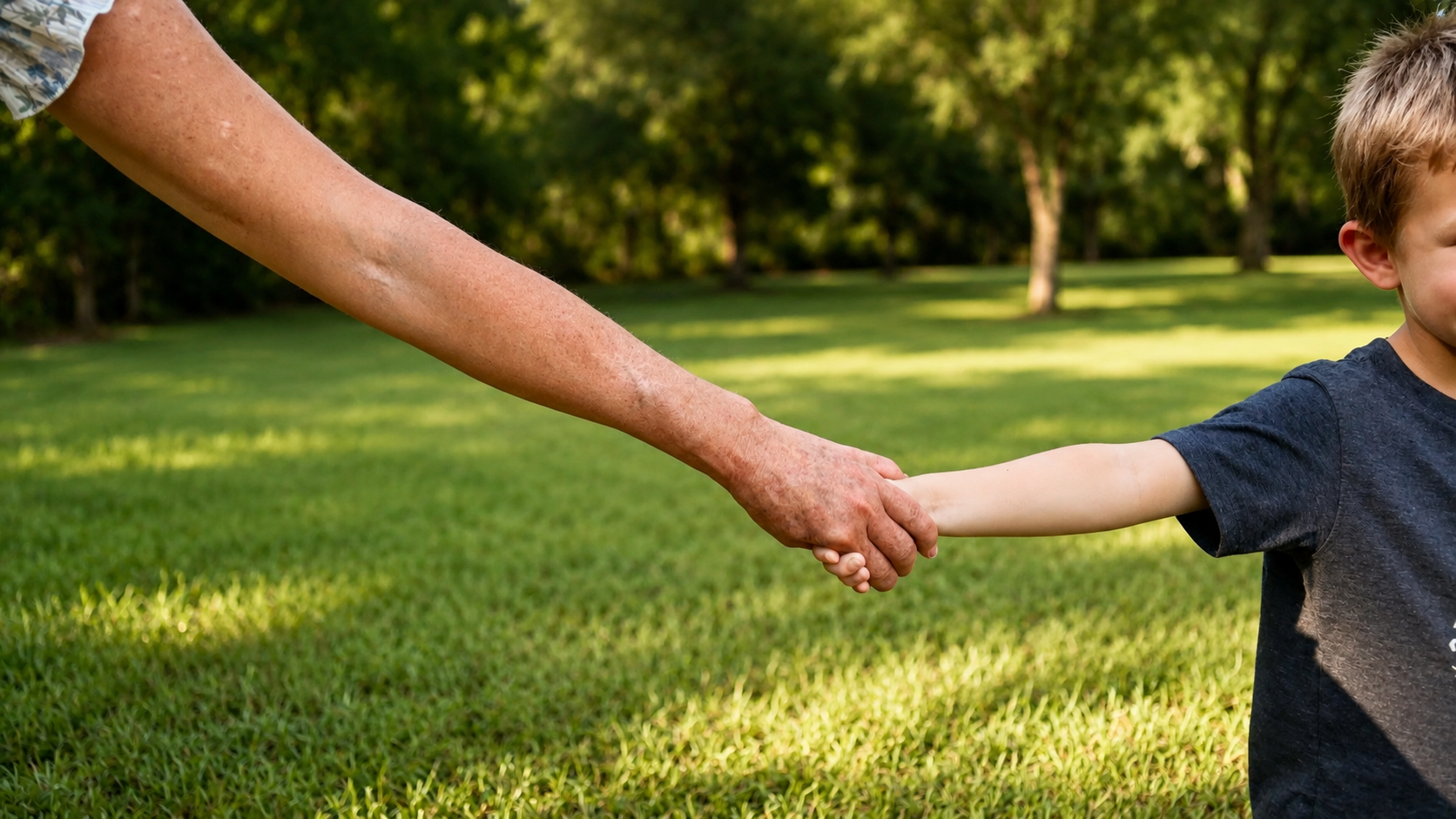
It was such an innocent question. In his four-year-old mind, he was trying to make sense of the world. Peyton had died. Birdie had come along. Now he was wondering how life would unfold when Finn, the dog he’s grown up with, is no longer here. I knelt beside him and told him something I hope he’ll remember, even if he forgets this walk. “Our hearts never stop loving, buddy. We still love Peyton. We love Finn. And now we love Birdie too. Our hearts keep making room.” He seemed satisfied with that answer. So we lingered there for another minute before continuing on our path. After a while, I noticed his pace slowing. Without saying a word, he reached over and slipped his little hand into mine. He wasn’t asking me to carry him like he sometimes does. It was like he wanted to know I was still walking beside him. I smiled, squeezed his hand, and we kept walking together.
It wasn’t until later that evening that I realized why that moment stayed with me. Over the past several weeks, districts and schools have been hard at work developing their improvement plans. They’ve examined achievement data, attendance, discipline, surveys, classroom observations, and the systems that support each. Effective teams celebrate strengths, wrestle with challenges, and ask enough “why” questions to move beyond symptoms and uncover the root causes standing in the way of student success. They align actions and avoid naming activities meant solely to be checked off.
Effective teams make commitments to students through intentional decisions about what adults will do differently, so students experience something better.
As I reflected on our walk, I realized that’s exactly what a good improvement plan should become. It’s not something that carries a school. Just like my hand guided my grandson, they help a school keep moving forward. Every action provides direction, and every monitoring checkpoint creates an opportunity to pause, reflect, and adjust. The collective commitment reminds people that improving student outcomes is never the responsibility of a single person. It happens when everyone keeps moving together toward a common purpose.
Just like my hand that afternoon. It didn’t take a single step for my grandson. He still had to do the walking, but when his legs grew tired, he knew where to reach. The best leaders don’t remove every obstacle or promise an easy journey. They create clarity when the path seems uncertain, offer encouragement when people grow weary, and work with teams to build systems and plans that are trustworthy enough for others to lean on when the work feels heavy.
As the sun began to settle a little lower in the sky and both of us were done with the southern heat, we finished our walk together. Somewhere between watching a turtle disappear into the water, talking about Peyton, wondering about Finn and Birdie, and feeling a little hand wrapped around mine, I was reminded that leadership isn’t about carrying people. It’s about walking beside them. Whether it’s a four-year-old grandson taking one more step or a school leadership team working to improve outcomes for students, the principle is the same. The people we lead aren’t looking for someone to do the work for them. They’re looking for someone who will walk beside them, help create a clear path to follow, and extend a steady hand when the journey becomes difficult. Because sometimes, the greatest gift a leader can offer isn’t carrying the weight. It’s simply making sure no one has to carry it alone.
If you happen to like this story, check out my new book on Amazon.


Leave a Reply