
Reaching the Destination: Using Student Work to Guide the Journey

(Part 3 of the “Recalculating” Series)

Haven’t read Part 1 or Part 2, be sure to check those out first.
Speaking as someone who is directionally challenged, and as I’ve shared before, I can get lost in a parking lot. I feel a genuine sense of accomplishment when I actually end up where I intended to go. That doesn’t happen by chance. It’s because I use my GPS to guide me. I’m certain, with its help, I could find my way to New York. In much the same way, when we use our standards to chart the course for learning and check in along the way, we give ourselves the chance to either recalculate or celebrate.

But just setting a destination isn’t enough. Along the way, I have to glance at the map, listen for turns, and sometimes reroute when I miss one. Teaching works the same way. Standards help us know where we’re headed, but it’s the lesson check-ins such as the effective questions, the short formative assessments, and the student work in front of us that tell us if learning is actually happening. When we take the time to look closely at that evidence, we can make decisions that keep students on the path toward mastery, rather than assuming they’ll find their own way there.

I’ve learned that if I don’t stop and check my direction, I’ll keep driving in the wrong direction with complete confidence. The same thing happens in classrooms. Teachers can teach their hearts out and still not be certain if the lesson was aligned to the rigor of the standard or if students are actually learning it. When you ask one or two students who know the answer, that is not confirmation they all know. That’s where formative checks for understanding come in. They’re like little landmarks along the way that help us see if students are actually getting there. It doesn’t take fancy tools or long tests. It simply requires a clear look at the work before us and an honest conversation about what it reveals. It’s important to also acknowledge those outcomes reflect our instruction. That’s the kind of intentional pause that helps teachers recalculate when needed and celebrate when learning sticks. That’s the kind of teaching that is steady, purposeful, and always headed in the right direction.

So, late-Lee, I’ve been thinking about this whole process. I struggle to understand where the disconnect is and why this seems to be such a challenge for some. We plan to teach the standards at the prescribed level, determine what success looks like, and design formative assessments that we can use to see if students are mastering the learning or identify where the gaps are that we need to address during and after we’ve delivered the planned lesson. Seems clear enough. Let’s now talk about reviewing the evidence. 

A Simple Way to Look at Student Work

Now, before anybody starts thinking this is one more thing to add to an already full plate ( I hear that often too.). Let me be clear: Looking at student work doesn’t have to be complicated. It just needs to be consistent. When we take a few minutes to pause and study what our students produced that day, we gather the kind of information that helps us teach smarter tomorrow.

I like to think of it as pulling over for a quick check instead of waiting until the end of the trip to find out we missed the turn miles back. The best teachers I know employ a simple routine that enables them to identify patterns in learning and make informed decisions about what comes next. Here’s a straightforward way to do that.

The Journey Through Learning Protocol

Step 1: Start with clarity

Review the learning target and success criteria. What did you expect students to know and show by the end of the lesson?

Step 2: Gather the evidence

Pull a small sample of student work from that day. It could be an exit ticket, a sticky note response, or even a quick reflection you captured in conversation.

Step 3: Sort and see

Lay out the work and look for patterns. Who clearly met the target? Who’s close? Who’s still off course? You don’t need a specific number or grade; you need a sense of where your class stands.

Step 4: Study a few samples

Choose one or two examples from each group and look a little closer. What do these pieces tell you about how students are thinking? What misunderstandings might be hiding in their responses?

Step 5: Plan the next move

Use what you found to decide what tomorrow needs. Perhaps some students are ready for the next challenge, while others require another approach. Either way, the goal is movement.

Step 6: Talk about it

Share what you learned with students. Let them see how their work guides your teaching. Ask them to reflect on what they can do next. Learning is more powerful when everyone knows the destination and how close they are to reaching it.

This protocol was adapted from the “Student Work Analysis Protocol” by the Rhode Island Department of Education and the National Center for the Improvement of Educational Assessment.

Reaching the Destination

When I finally pull into the location after a long ride, there’s a quiet satisfaction in knowing I made it. I might’ve had to circle the block once or twice, but I got there. Teaching is no different. The road to learning is rarely straight, and the best teachers aren’t the ones who never miss a turn. They’re the ones who notice when they have and make the adjustment.

Formative assessments are what help us do that. They let us see if students truly arrived where the lesson was meant to take them. When we slow down long enough to look at their work, we’re not just checking for completion. We’re checking for understanding, growth, and readiness for what’s next.

So whether you’re recalculating, celebrating, or somewhere in between, remember this: every stop along the way tells you something about the journey. Keep your eyes on the map, your heart in the work, and your hands steady on the wheel. That’s the Late-Lee way to reach your destination: one thoughtful turn at a time.
Start at the Bottom: Leadership Lessons from a Crooked Shirt

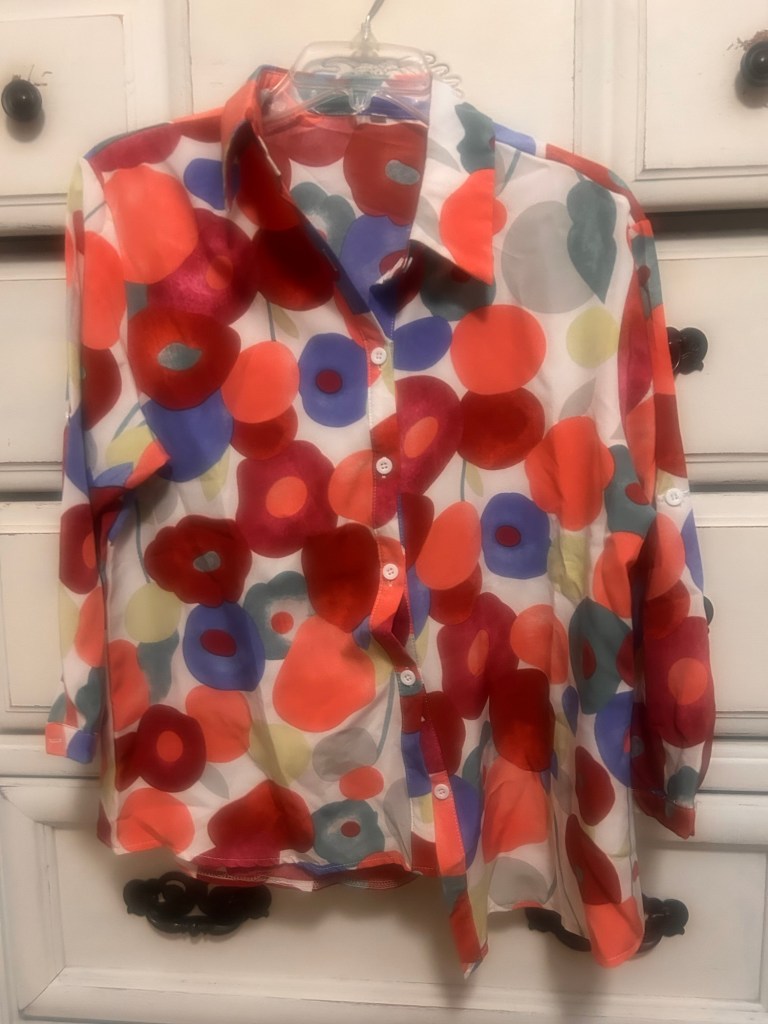
Late-Lee, I’ve been getting “schooled” by my husband—again. This time it wasn’t about how I load the dishwasher or whether towels should be folded in thirds or halves. No, this time it was about buttoning a shirt.

He starts at the bottom and works his way up. I, naturally, start at the top and work my way down. I mean there are more than two ways to skin a cat, right? But more times than I’d like to admit, I get to the bottom and realize I’ve got one button left with no hole to put it in. Every. Single. Time. Then I have to unbutton the whole thing and start over.

Standing there, staring at my crooked shirt, I had a thought: This is exactly what happens when leaders try to lead from the top down without making sure things are aligned.

In schools, we do this more than we realize. We roll out big initiatives, focus on frameworks, timelines, and catchy acronyms. We start at the top. And it sounds solid—until we get to the people closest to the work and realize something doesn’t fit.

It looks good on paper, but it’s misaligned in practice. Just like my shirt, the whole thing ends up a little off. And that’s when we’re faced with a choice: fix it, or pretend not to notice and keep going crooked.

Start from the Bottom

Strong leadership doesn’t start at the top. It starts with the folks closest to the work.

It’s the teacher managing 27 different needs and a pacing guide. Or, the para keeping small group instruction on track. It’s even the cafeteria manager who knows who skipped breakfast. And let’s not forget the coach noticing both instructional gaps and emotional ones.

When we begin by listening—really listening—we build plans that make sense and hold up under pressure.

Check for Alignment

Before you launch something new, take a minute to ask yourself…

Have I talked to the people doing the work? What are they seeing and experiencing? Does this plan make sense at every level—student, teacher, leader, and family? Are we addressing the root cause, or just reacting to a symptom? Have I made space for feedback—and am I actually listening? If I were in the classroom or hallway, would this feel doable?

Sometimes the smartest thing a leader can do is pause and look down—not out of defeat, but to make sure everything lines up. Starting from the bottom might take a little longer, but it saves you from having to redo it all later.

And let’s be honest—nobody has time for that.

More Miles

Late-lee, I have been thinking about a recent bike ride my husband and I went on. He was so cute! He will occasionally agree to go with me so I was happy for the company. It was a beautiful day, so why not get out there and enjoy it, right? All was well for the first 3 miles. We were zipping around the island like professional bikers. We were scoping out the hidden trails eager to keep riding. He would slow down when he made his way too far ahead, so we could talk and enjoy one another’s company in the balmy salt-air breezes. Great, right?

By the time we made it around to the beautiful inn on the island, he decided to do a mileage check. I sweetly informed him we were at mile 4 and we should return to the parking lot where our truck was located in about 6 or so miles. Unfortunately, he is hard of hearing, and he thought I said we would get there at mile 6, so he’s thinking only 2 more miles…only…

Off we went still scoping out things as I checked my Garmin and saw the miles clicking off. I started noticing he was standing up on his pedals a good bit more. I noticed his shirt was getting wetter with sweat. He also seemed to be speeding up a bit more and only now and again would he do a check to see if I was still trailing behind. I had already decided, “why should I quickly ride when I could slow down the pace a bit and enjoy the scenery, the breezes, and the quiet of the day that allowed me to escape into my thoughts.” Let him race the miles away, either way…we are still covering the same distance. Keep in mind, I’m still picturing a Hallmark movie scene, but apparently, his thoughts had him imagining a scene from Friday the 13th where he was being chased by Jason!

I kept noticing we were going mile after mile and when we hit the 6 miles I thought it would take us to get there (so mile 10), we still weren’t close. Maybe I should have said 6ish miles! My husband is not rowing with just one oar, he’s a smart man. He knew we still had a ways to go to the car and that we had just ridden at least 6 more miles, so the look on his face (like he had gotten a burr in his saddle) when he stopped for a second told me I had better come up with something good to say. So in my sweetest voice I said, “This has been so nice today! I’m so glad you and I came to spend this time together and enjoy the beautiful afternoon.” I opened my arms wide so he could truly take in the beauty of the island I was trying to sell him at this point. Let’s not forget, I”m still imagining a Hallmark scene, but since he had already drifted off into horror movie scenes, his response wasn’t quite as nice…tee hee! We happened to stop at some historical graves at that point. He walked around them reading the information on the markers. I was imagining he was actually sizing them up because he was going to cancel my birth certificate since I was the root of his sore behind! If… he had heard me, we could have gone down one specific road that would have taken us back to our vehicle in probably less than one mile. LOL!

The last 3 miles (we ended up riding 13), were quiet. I was really enjoying myself, because when I looked at things from my perspective, I felt accomplished, healthier for having made the ride, and a little bit giggly because I knew what he was thinking. Don’t get me wrong…I am sure he enjoyed being out there, but it was easy to see his goose was got! He rode the remaining distance faster than a hot knife slicing through butter…and mostly while standing up on the pedals!

People who know me well, know I’m going to find the bright side and am always looking for the lesson to be learned in any situation I find myself in. In this one, I’m reminded that there are always multiple paths to choose. Robert Frost said, ” Two roads diverged in the wood and I – I took the one less traveled by and that has made all the difference.” Much like he described, you can opt for the short cuts and speed through life, or you can choose to journey the distance and leave your fingerprints on the world in places still left untouched. Instead of seeing each obstacle you encounter as something negative, you can embrace the pain along the way, slow down a bit, and truly enjoy the beauty of life around you! If my husband had heard me, we could have been finished with our afternoon ride very quickly. Since he didn’t, I was able to enjoy more time with him! In the end, people won’t remember the things we bought them, but they will remember the times spent together. Life is fragile. Enjoy the company of those you love even if it means enduring a sore behind! 🙂