
 by
by 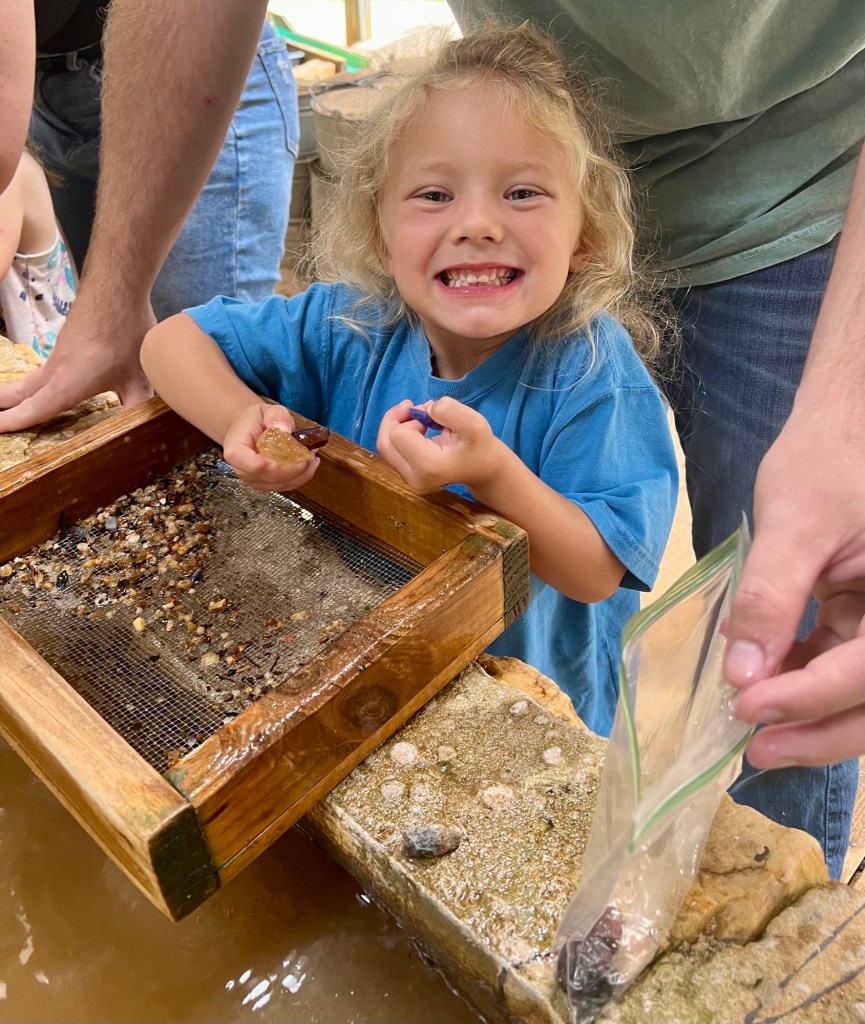
Late-Lee, I’ve been going through old photos trying to purge some to make room for others. I ran across a set from when I took my granddaughter to a gold mine. I had a good giggle remembering how excited we were when we found those little fragments of shiny “gold” only to learn it was pyrite. She learned a new word, but her bank account wasn’t any richer.
That memory came back to me recently as I was visiting classrooms with school and district leaders. The rooms where students were quiet and well-behaved were getting the highest ratings. On the surface, everything looked calm, orderly, almost picture-perfect.
But here’s the problem: when I looked closer, I didn’t see alignment between what students were doing and the standard they were supposed to be learning. People who work alongside me know that the first thing I’m doing is pulling up my state’s standards and testing resources so I can compare the work students are busy completing to the level of the state assessment. And if school leaders aren’t doing that same comparison, how can they honestly say there is rigor? In these classrooms, the match wasn’t there. The students weren’t talking to each other. They weren’t grappling with ideas. They weren’t engaged in meaningful work. The teacher was active, but the kids weren’t the ones doing the learning.
It reminded me how easy it is to get caught up in what I call the “happy shiny features” of a classroom. Quiet can feel like control. Neat rows can feel like structure. A compliant class can look like a successful one. But none of those things automatically equal learning. When students are simply interacting with rote activities, they aren’t exercising critical thinking. If they aren’t writing when reading, there’s no connection between interpreting and constructing text. When they’re just plugging and chugging math problems, there’s no analysis or evaluation of mathematical concepts.
As leaders, we have to inspect closer. Just like panning for gold, it takes some sifting to separate the obvious from the real thing. Instead of stopping at what looks good, we need to ask:
Is the task aligned to the standard? Are students doing the cognitive heavy lifting? Is there evidence of student discourse and engagement? Can I see the learning happening, not just the teaching?
Great leadership requires us to resist being dazzled by surface-level shine. Remember, all that glitters is not gold. And if you have ever panned for gold, you know exactly what I’m talking about. In the end, we’re not in this work to create quiet classrooms. We’re here to create learning ones. Our role is to help grow teachers into their best selves, supporting them with the kind of coaching and feedback that sharpens their practice. When we do that, we’re not just refining instruction. We’re cultivating robust learning environments where students can think deeply, engage fully, and thrive.
(In my last post, Coaching from the Sidelines, I shared a practical coaching frame leaders can use to move teachers past surface-level shine and into meaningful learning. Check it out if you need a framework for feedback.)
So next time you walk into a “happy shiny” classroom, pause and look deeper. Don’t just celebrate the appearance of success. Celebrate the evidence of learning. Because in the end, we aren’t here for shiny. We’re here for bold, messy, thoughtful work. The kind that sparks real learning.That’s where the real shine is.
 Rhonda "Late" Lee
Leave a comment