
 by
by 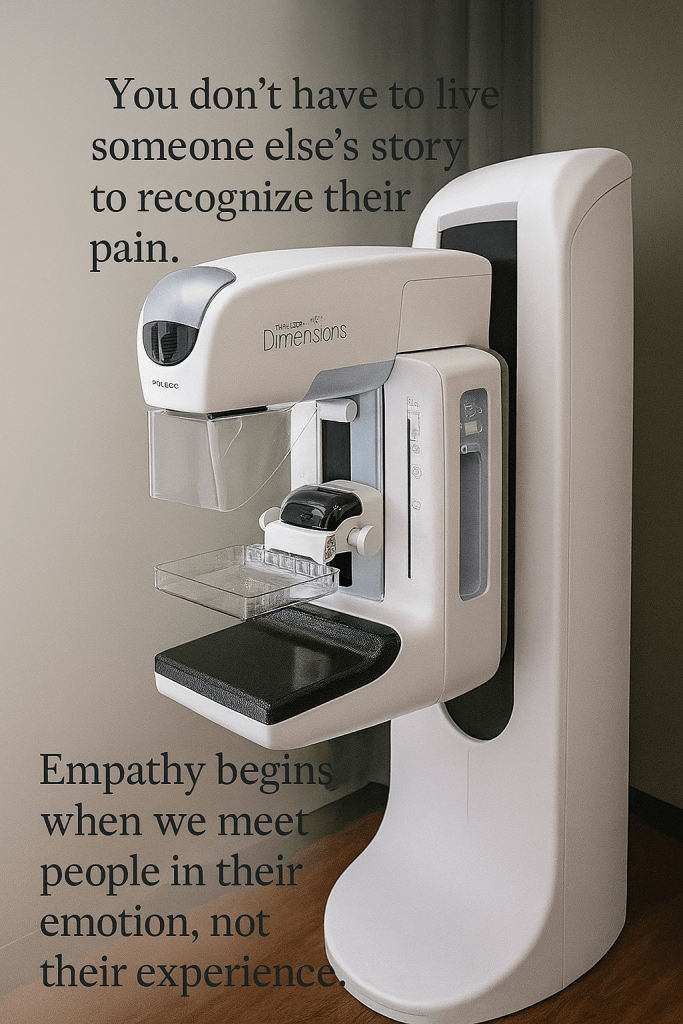
I recently had my annual mammogram. And like always, the anxiety showed up a few days early, tagging along with me like an unwanted shadow. I’ve been called back for additional imaging more times than I can count, so that nervous hum in the background I deal with in the days preceding the appointment is all too familiar.
You stand there in a gown, bare from the waist up, while the tech gently but firmly moves you into position. They use simple directions like chin up, shoulder forward, arm here, and hold your breath. That’s a hard one for me because I feel like I hold my breath the entire time. By the time I’m directed to do that I feel like I might pass out. The room is cold. The machine feels even colder. You’re not in pain, but you’re exposed and you feel vulnerable. During those few moments, you’re completely still, both in body and in thought.
And standing there trying to distract myself, I started thinking about empathy. Real empathy. The kind that goes deeper than a kind smile or quick “I understand.”
A few years ago, after retiring from education (the first time), I worked at a hospital and helped in providing Service Excellence training for the team members. So late-Lee I have been thinking about that training. I know it wasn’t a favorite among some team members, but it did provide opportunities for going deeper into the core values of the organization. One of the conversations we often had was about empathy versus compassion. Compassion is feeling for someone. Empathy is feeling with them. That distinction has stayed with me ever since.
Back in my school leadership days, I tried to lean into my own experiences to better connect with others like a struggling parent, a burned-out teacher, or a grieving or frustrated student. I’d search my heart for something I’d been through that might help me relate. But the truth is, you can’t always do that. I haven’t lived every story. None of us have.
So how do you empathize with something you’ve never personally experienced?
It’s a question that matters for every leader, and honestly, for every human. Because real empathy doesn’t require that you’ve walked the same road. It requires that you care enough to stop and notice the weight someone else is carrying.
Over time, I’ve learned to use the emotions I have felt such as fear, sadness, helplessness, and shame as a bridge that I could cross over and connect. I’ve learned to say, “I haven’t been where you are right now, but I know what it’s like to be scared. I’m here.” I’ve learned that empathy isn’t about having the right words. Sometimes, it’s just about being willing to stand quietly beside someone in their moment and let them feel your support.
Whether you’re leading a school, supporting a team, or just navigating the people around you, always remember that you don’t have to live someone else’s story to recognize their pain. Empathy begins when we meet people in their emotions, not their experiences.
And sometimes, a cold machine and a quiet room will remind you just how much a gentle voice or thoughtful presence can matter.
 Rhonda "Late" Lee
Leave a comment